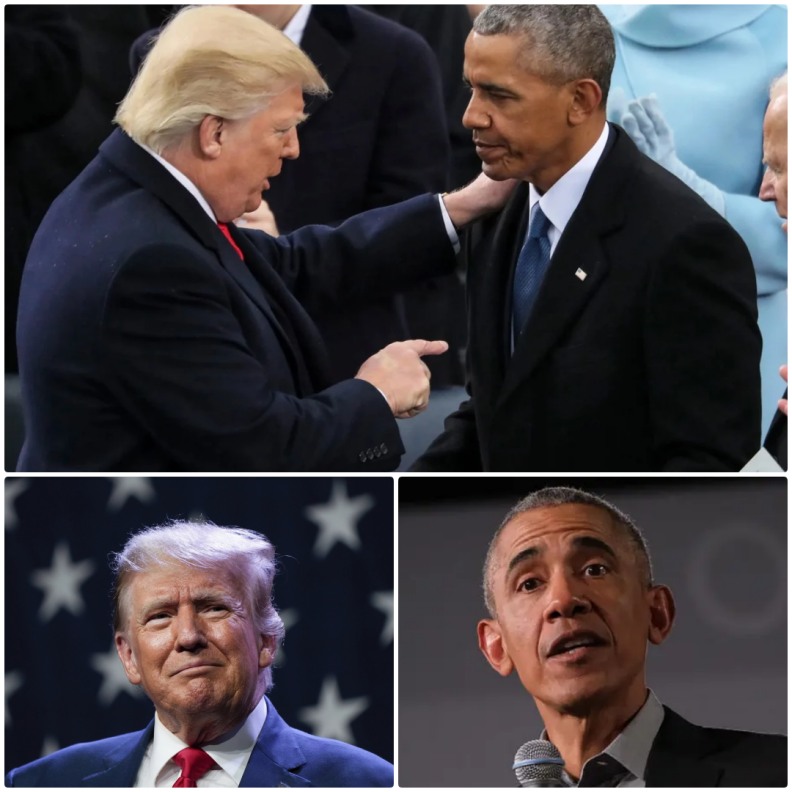
The Oval Office has served as the backdrop for some of the most consequential decisions in human history, from the signing of civil rights legislation to the management of global conflicts. However, few moments in its long history have been as charged with personal and political electricity as the private meeting that recently took place between Donald Trump and Barack Obama.
What was officially billed as a routine discussion on national priorities quickly devolved into a psychological chess match between two men who represent diametrically opposed visions of American identity. The encounter was not just a meeting of presidents; it was a collision of temperaments that left the White House staff reeling from the intensity of the exchange.
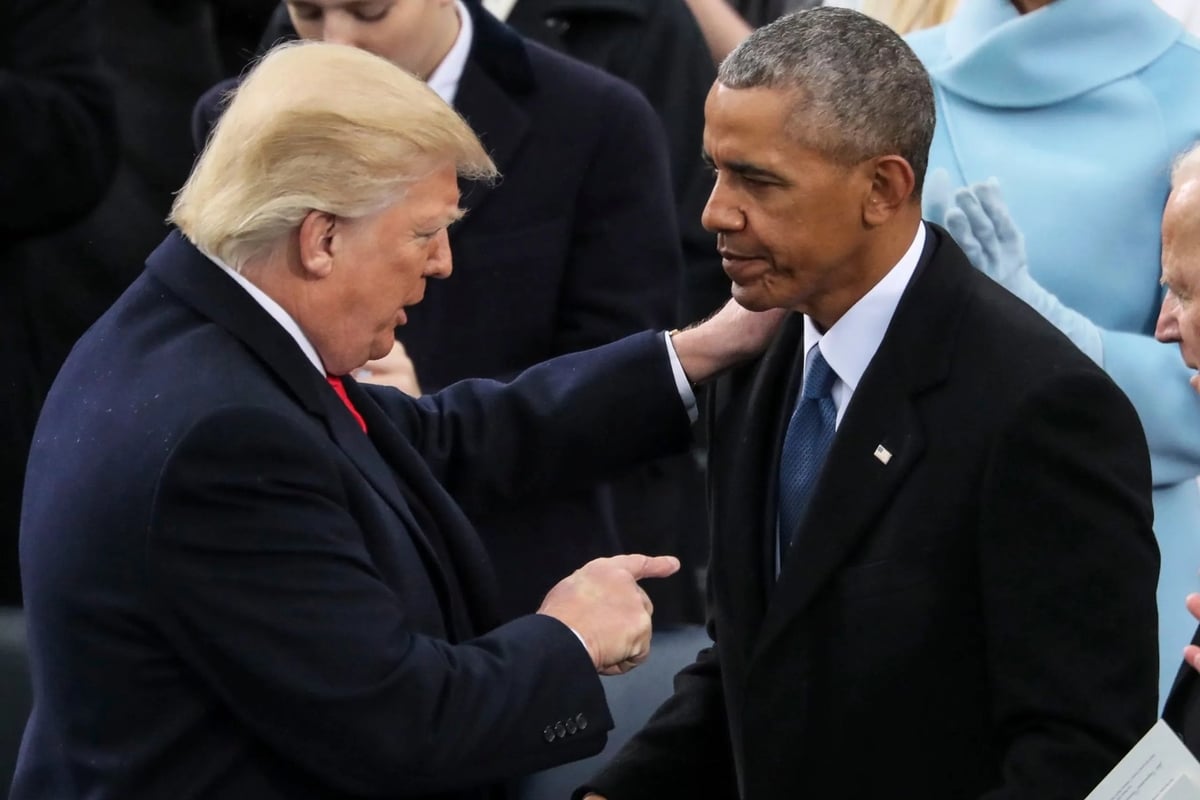
Donald Trump, ever the master of the theatrical, reportedly entered the meeting with a clear strategy to assert dominance. Seated behind the massive Resolute Desk, he appeared to be in his element, projecting an air of relaxed authority that masked a calculated intent to unsettle his predecessor.
Barack Obama, by contrast, entered the room alone, eschewing the typical entourage that usually accompanies high-profile figures. His approach was characterized by a stoic calm, a demeanor he honed over eight years of navigating some of the most turbulent periods in modern history.
The pleasantries were brief, a thin veil of civility that was quickly discarded as Trump steered the conversation toward a topic that has long been a flashpoint in their relationship. He brought up the “birther” conspiracy theory, a claim he had spent years fueling during Obama’s presidency.
Rather than making a direct accusation, Trump used the rhetorical tactic of citing “other people” who were still asking questions about Obama’s origins. It was a classic move designed to force Obama onto the defensive and revive a controversy that had been legally and factually settled for a decade.
The room grew still as aides waited for a reaction that never came in the form they expected. Obama did not snap, nor did he offer a lengthy, impassioned defense of his citizenship or his character.
Instead, he paused for a moment, allowing the weight of the provocation to hang in the air until the silence itself became uncomfortable for everyone present. When he finally spoke, his voice was level, devoid of the irritation that many would have found justified.
Obama compared the continued obsession with his birth certificate to the fringe beliefs of those who deny the moon landing. He noted that while people are free to believe in fantasies, those fantasies do not deserve a seat at the table of serious governance.
To drive the point home, Obama took a physical copy of his long-form birth certificate and placed it squarely on the desk between them. He looked at Trump and remarked simply that the paper had not changed in all the years since it was first released.
This move effectively neutralized the provocation, turning a potential trap into a moment of factual finality. The shift in energy was palpable, as the person who had intended to be the hunter suddenly found himself the subject of a quiet, intellectual reprimand.
As the discussion moved into the realm of policy and leadership styles, Trump attempted to regain the initiative by contrasting his aggressive, results-oriented approach with what he labeled as Obama’s rhetorical focus. Trump spoke of “getting things done” as the ultimate metric of success.
Obama’s response was one that will likely be studied by political scientists for years to come. He told Trump that while “doing things” is easy, “doing the right things” is where the true challenge of the presidency lies.
The remark was not loud, but it carried a philosophical weight that seemed to catch Trump off guard. For a man who prides himself on movement and action, the suggestion that his actions lacked the necessary moral or strategic grounding was a direct hit.
It was at this point that witnesses noted a break in Trump’s composure. He accidentally dropped a pen while gesturing, a small physical stumble that mirrored the loss of rhythm in his verbal delivery.
The silence that Obama allowed to stretch between their exchanges began to feel like a vacuum, sucking the air out of Trump’s high-energy persona. Obama used these pauses as a tool, refusing to rush into the gaps that Trump tried to create.
The conversation then took an even more personal turn when Obama addressed Trump’s public comments regarding his daughter, Ivanka Trump. Because she held a formal role as a White House advisor, Obama argued her treatment in the media was a matter of public record.
Trump immediately bristled at the mention of his family, dismissing his previous controversial remarks as “jokes” or “banter” that had been taken out of context by a hostile press. He accused Obama of distorting the truth for political gain.
Obama did not take the bait to start a shouting match. He simply repeated the specific words Trump had used in the past, letting the president’s own language serve as the evidence without adding any additional commentary.
“It’s always a joke after the fact,” Obama said quietly. This observation pointed toward a pattern of behavior that he suggested was beneath the dignity of the office they both held.
The meeting did not end with the usual handshakes and smiles for the history books. Instead, it reached an abrupt conclusion that left the air thick with unresolved tension and mutual coldness.
When Trump stood up and extended his hand in a gesture that seemed more like a demand for closure than a sign of respect, Obama declined to take it. He wasn’t interested in a performative display of unity that didn’t exist.
Obama’s final words to Trump before exiting the Oval Office were a stinging reminder that leadership requires a constant process of learning and self-reflection, rather than a reliance on denial and pretense. He walked out of the room with the same measured pace he had entered with.
Left behind in the office, Trump reportedly spent several moments alone, fidgeting with papers on the Resolute Desk that didn’t need his attention. The silence of the room was a stark contrast to the noise he usually surrounds himself with.
In the days following the encounter, Obama has remained true to his style, refusing to leak details or use the meeting as fodder for the 24-hour news cycle. He understands that some messages are more powerful when delivered in private.
In a general interview later, Obama spoke about the nature of power, stating that “calm doesn’t retreat from noise; it outlasts it.” This philosophy was on full display during those tense minutes in the White House.
The meeting serves as a microcosm of the broader struggle within American politics: a battle between the loud, disruptive force of populism and the measured, institutionalist approach of the traditional elite.
For those who were in the room or close to the principals, the takeaway was clear. Dominance is not always achieved through volume or aggression; sometimes, it is the person who refuses to be moved who holds the real power.
The exchange may not have resulted in a new piece of legislation or a change in foreign policy, but it provided a profound look at the character of the men who lead the nation. It was a study in the exercise of authority and the resilience of dignity.
As the nation moves forward, the echoes of this private showdown will likely continue to influence how both men are perceived by the public and by history. The trap was set, but the prey proved to be far more elusive and formidable than expected.
Ultimately, the meeting in the Oval Office was a reminder that the presidency is more than just a job; it is a test of temperament that reveals the core of a person’s soul under the greatest possible pressure.