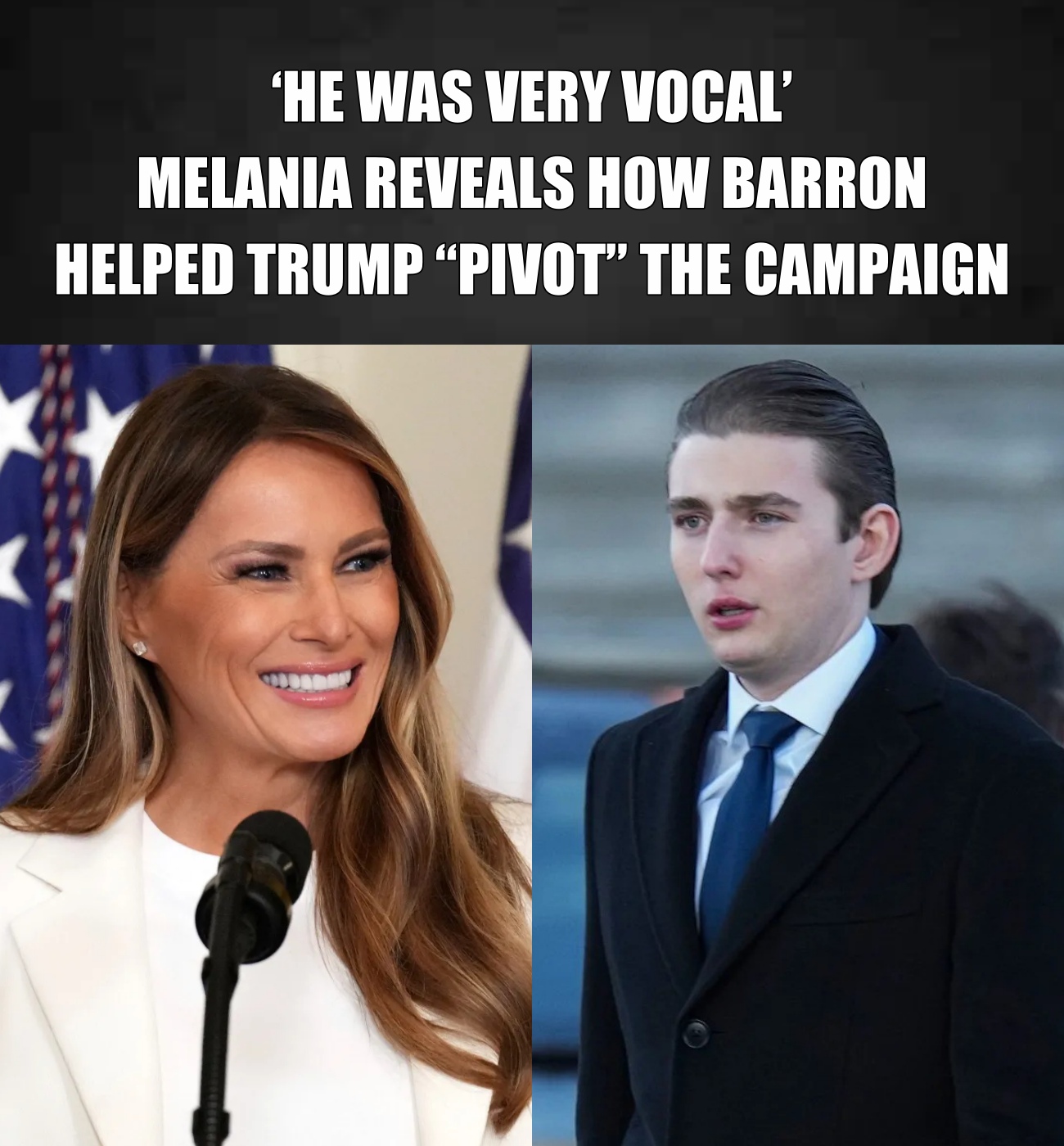
It wasn’t a seasoned political strategist or a longtime media adviser behind one of the most surprising shifts of the 2024 campaign, according to Melania Trump. It was Barron Trump — the quiet, towering son who has long hovered on the edges of public view — whom Melania now describes as a crucial link between Donald Trump and younger voters.
Speaking on Fox & Friends, the former first lady was blunt. Barron, she said, was “very vocal” — proactive, insistent, and clear-eyed — in telling his father that winning in the Gen Z era meant abandoning the old assumption that television still mattered most. To reach young voters, she said, Trump needed to enter the world where they actually live: podcasts, YouTube, streamers, phones, and tablets.
The story Melania tells sounds like a campaign roadmap drawn by an 18-year-old who grasped something many politicians still resist admitting: young people no longer sit around waiting for messages on TV screens. They choose who they listen to — and where.
“It’s not about being on camera,” the logic goes. “It’s about showing up in the right place.”
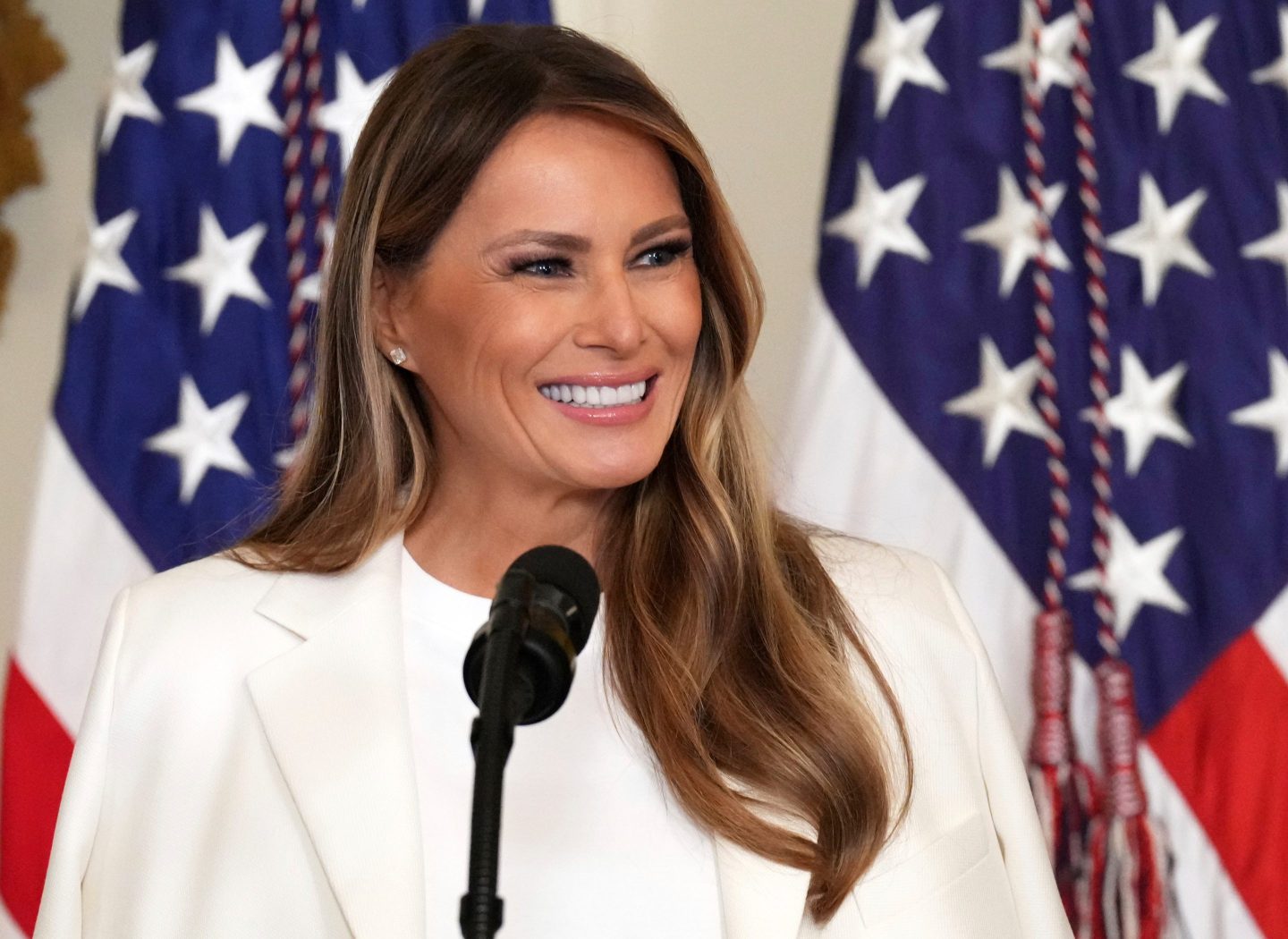
According to Melania, Barron didn’t offer vague advice about “new media.” He knew exactly who his father should talk to, where he should appear, and which voices could genuinely resonate with Gen Z.
“He knew exactly who his father needed to contact and to talk to,” she said.
“He brought in so many young people — he knows his generation.”
The picture she paints is clear. Barron viewed the campaign as a platform war. And once the platform shifted — from television to podcasts — the entire strategy had to shift with it.
From television studios to podcast microphones, the change was more than tactical. It reflected a generational reality.
What followed, in Melania’s telling, looked like a series of smart, well-timed moves. Trump began appearing on platforms with massive built-in audiences, particularly shows popular with younger listeners and built around long, informal conversations — the kind of environment traditional television rarely allows.
Names that surfaced repeatedly included Joe Rogan, Theo Von, Flagrant, and Impaulsive with Logan Paul — shows widely viewed as shortcuts to millions of young people without the filter of legacy media.
The impact wasn’t just about view counts. It was about perception. Trump didn’t feel like a distant political figure on a stage. On podcasts, he wasn’t limited to 90-second soundbites, wasn’t cut off mid-answer, and wasn’t boxed into rigid news formats. He sat down, talked, reacted, joked, rambled at times — and that looseness, that lack of polish, made him feel more real to many younger viewers.
This is the kind of effect traditional campaigns often underestimate: when candidates step into spaces young people already trust, they look less like politicians — and more like participants.
Melania’s account was echoed by senior Trump adviser Jason Miller, who praised Barron’s instincts publicly. Miller described the teen as having an almost uncanny sense for online attention, saying that every recommendation Barron made turned into “ratings gold” and, in some cases, “broke the internet.”
Placed alongside Melania’s remarks, the image is striking: a teenager emerging quietly from the background, not seeking the spotlight, but understanding something many adults don’t — how attention actually moves online.
Melania’s description of Gen Z was simple and unsentimental.
“They are all on the tablets, they are on the phones… podcasts and streamers,” she said.
That blunt observation helps explain why the Barron story caught fire. It was a rare acknowledgment from a political family often labeled as old-school that modern elections now hinge on understanding the attention economy.

If Melania’s account is accurate, Barron didn’t just help his father “do a few shows.” He helped reshape how the campaign operated — from choosing platforms and tone to turning long-form interviews into content that could be clipped, shared, and remixed endlessly.
For years, Barron has been the most protected member of the Trump family — rarely speaking publicly, rarely appearing in political settings, and largely shielded from scrutiny. Melania said he is now a freshman at New York University, and that the family has taken steps to preserve his privacy even as his parents return to the White House.
That’s why the sudden revelation that Barron functioned as a kind of behind-the-scenes podcast strategist sparked such a strong reaction. People were surprised, curious, and in some cases openly impressed.
Not because Barron was “doing politics” in the traditional sense — but because he represented exactly what Trump needed in a modern campaign: a bridge to a generation older strategies consistently fail to reach.
Melania also recalled the moment on election night when Trump mentioned Barron by name, prompting chants from the crowd. In that instant, Barron wasn’t just the president’s son. He had become part of the narrative.
For a campaign built on symbolism and crowd energy, that mattered. Barron was no longer just a private figure — he was cast as a Gen Z connector, a living symbol of generational reach.
In the end, Melania isn’t just telling a family story. She’s describing a shift in how American politics now works.
You can love Trump or hate him. But the underlying point stands: media power has moved.
Young people don’t passively receive information anymore. They choose it.
They don’t sit in front of televisions. They live in feeds.
They don’t wait for speeches. They watch 40-second clips cut from two-hour conversations.
And according to Melania Trump, Barron understood that from the start.
In an era where elections are decided not just in swing states but on platforms, her message is clear.
Trump didn’t just race against his opponent.
He raced against time.
And the person who helped him keep pace — at least in her telling — was an 18-year-old son, “very vocal,” standing just offstage, fully aware of where the real spotlight had moved.