The air over Caracas was still thick with the smoke of “Operation Absolute Resolve” when the first cracks in the MAGA monolith began to show. It wasn’t the usual partisan bickering that signaled the shift, but a cold, calculated realization among seasoned military leaders and constitutional scholars: the abduction of Nicolás Maduro wasn’t just a military strike; it was a manifesto.

As of January 2026, the United States finds itself at a crossroads that feels more like a cliff edge, led by a President who has effectively declared that the War Powers Act is a relic and that his authority as Commander-in-Chief is absolute.
The rapid disintegration of support for Donald Trump among his traditional allies is not a slow burn—it is an acceleration into freefall. The “Political Earthquake” began when a former General, whose name has been whispered in the halls of the Pentagon for decades, broke a career-long silence to expose the internal mechanisms of Trump’s new war machine.
This testimony, combined with the President’s recent public vitriol against his own party, paints a picture of a White House that is no longer interested in governing through consensus, but through a series of high-stakes, unilateral shocks designed to “flood the zone” and paralyze opposition.
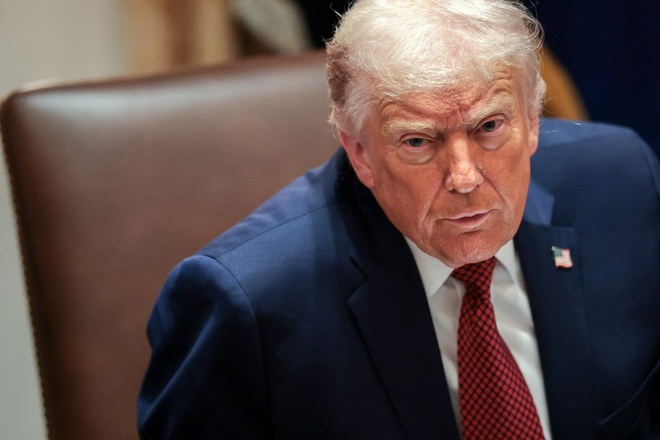
Over the weekend, the tension reached a breaking point when Trump launched a furious public attack calling for the electoral defeat of five Republican senators who dared to defy him. These weren’t the usual “RINOs” he targets; they included constitutional conservatives and long-term party pillars.
The named targets—Susan Collins, Lisa Murkowski, Rand Paul, Josh Hawley, and Todd Young—shared one “sin”: they joined Democrats to advance a resolution that would require the President to seek explicit congressional approval before undertaking further military action. To Trump, this was not a check and balance; it was an act of treason against the “America First” movement.
The President’s response on Truth Social was a masterclass in his signature brand of rage-filled rhetoric. He claimed the Senate’s vote “greatly hampers America’s self-defense” and explicitly called the War Powers Act unconstitutional, asserting that Article II gives him the unilateral power to act as he sees fit.
But beneath the legal jargon lies a much more visceral reality. This isn’t just about the legality of a raid on a foreign palace; it is about the precedent of a President who views international borders—and domestic laws—as optional suggestions rather than rigid boundaries.
Let’s talk about the prize that everyone in Washington knows is the real driver of this escalation: oil. While the administration frames the Venezuelan intervention as a “narco-terrorism” operation, the numbers tell a different story.
Venezuela sits atop the largest proven oil reserves on the planet, roughly 300 billion barrels worth an estimated $21 trillion. That is a jackpot that dwarfs the reserves of Saudi Arabia and is four times larger than what the United States holds. By toppling Maduro and installing a compliant interim government under Delcy Rodríguez, Trump has effectively seized control of the global energy market’s most valuable backyard.
Refineries along the U.S. Gulf Coast, which were originally built to process the heavy crude found in the Orinoco Belt, are already ramping up for a massive influx of Venezuelan oil. This isn’t just a “law enforcement operation,” as the White House claims; it is the largest hostile takeover in modern history.
The strategic geography is equally tempting. Controlling Venezuela means the U.S. can dictate the energy future of the Western Hemisphere, a goal that aligns perfectly with Trump’s revival of the Monroe Doctrine, now rebranded as the “Trump Corollary.”
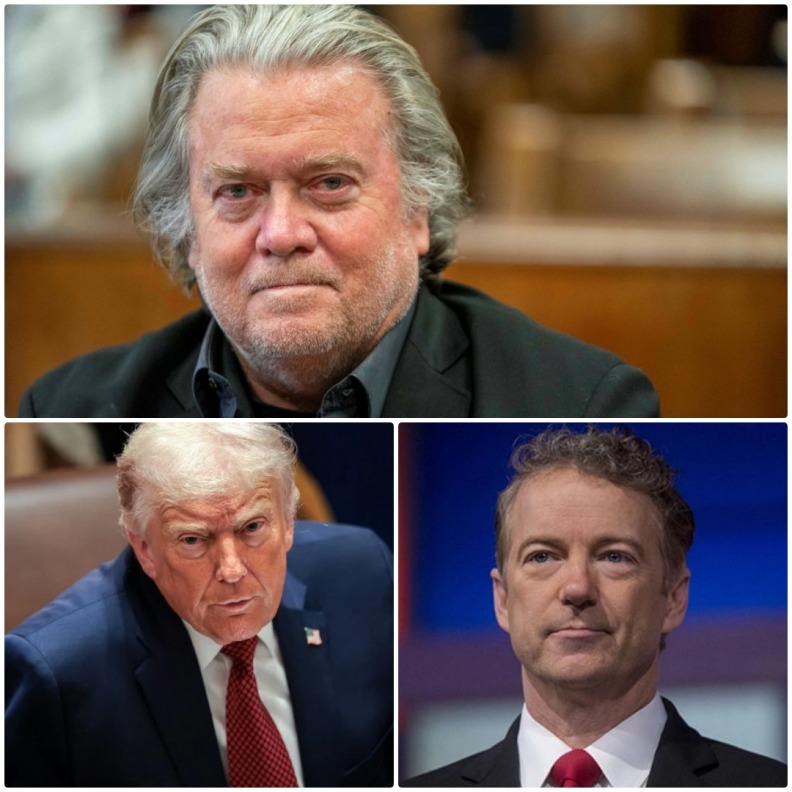
The unease on Capitol Hill is palpable, even among those who cheered the initial headlines of Maduro’s capture. Senator Rand Paul delivered a chilling warning during the recent Senate debate, reminding his colleagues that the power to take a nation to war is the most dangerous power any government possesses.
“The question is not whether a regime is good or evil,” Paul argued. “The question is who has the power to take the nation to war.” When that power is concentrated in the hands of one man who views NATO as a “protection racket” and Greenland as a real estate opportunity, the guardrails of the Republic aren’t just rattling—they are snapping.
Trump’s recent threats against America’s closest neighbors have only deepened this sense of dread. The White House has openly stated that “all options are on the table” regarding Greenland, an autonomous territory of Denmark and a NATO ally.
When you combine this with his suggestions that Canada should become the “51st state” and his demands to re-seize the Panama Canal by force, the strategy becomes clear. Trump is treating the world map like a monopoly board, and he is playing for keeps. The rhetoric of “paying your fair share” has evolved into a policy of “relinquish your territory or face the consequences.”
The human cost of this chaos is already being felt at home. While the military-industrial complex eyes Venezuelan oil, American families are watching as paramilitary-style ICE forces are unleashed on protesters and hardworking immigrant communities.
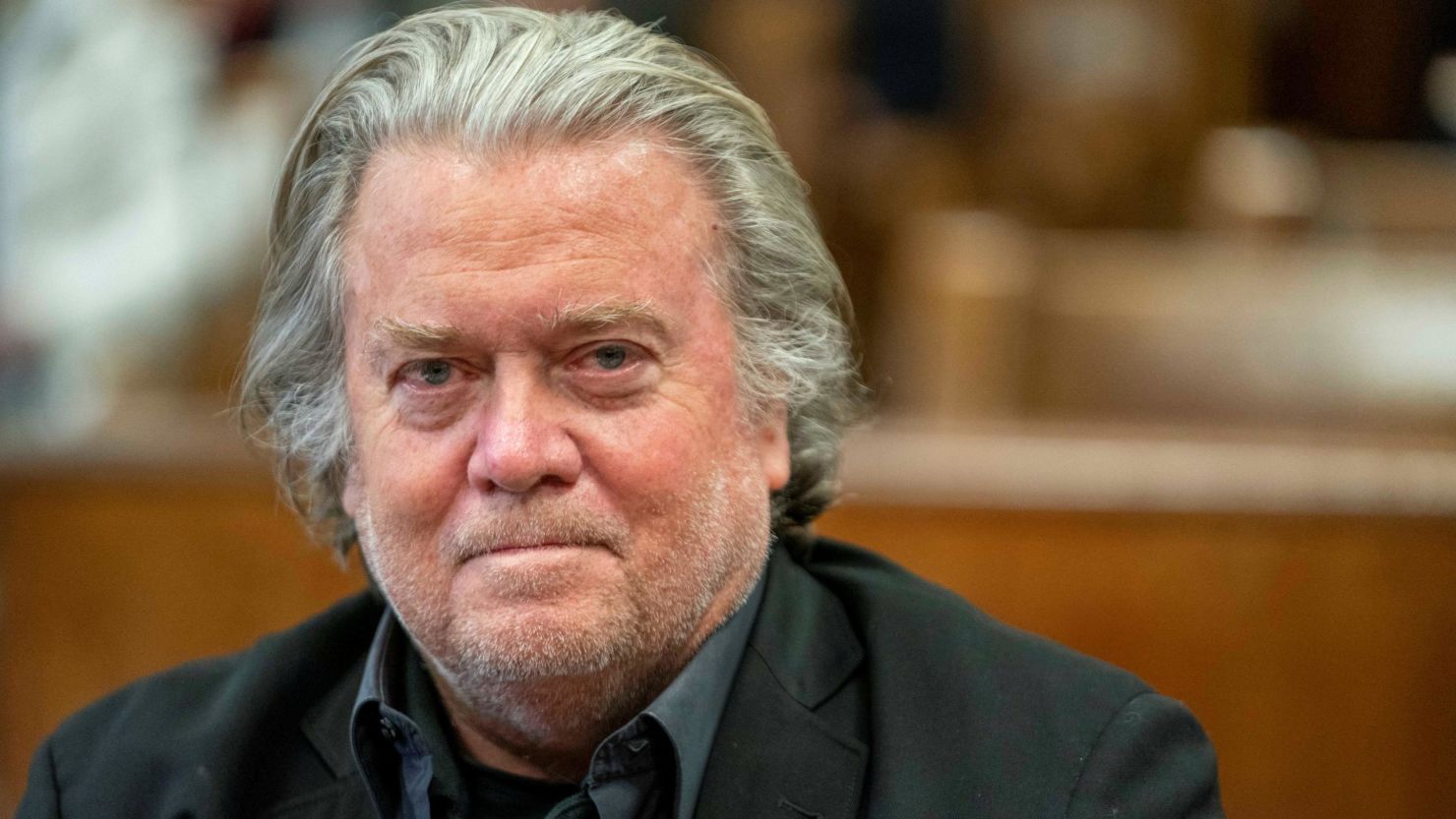
The strategy, as explained by Steve Bannon years ago, is to create so much noise and conflict that the public becomes exhausted and loses track of what is actually being lost. “Flood the zone,” Bannon said. If you hit the public with three scandals a day, they will focus on one, and the administration can get everything else done in the shadows.
But the “Everything Else” is what should keep every American awake at night. We are seeing a rhetorical shift in federal departments that mirrors the most dangerous eras of the 20th century.
The Department of Labor recently released social media posts featuring slogans like “One Homeland. One People. One Heritage,” a chilling echo of fascist propaganda that aimed to “erase the other.” When government agencies start using AI-generated imagery to depict a “pure” version of the American worker, they aren’t just advertising jobs—they are signaling who belongs in the “new” America and who doesn’t.
The reality is that Donald Trump cannot be stopped by Democrats alone; his power relies on the continued compliance of the Republican Party. However, the cracks are finally forming.
When someone like Josh Hawley—who was once the face of the January 6th movement—starts to show public unease with the President’s appetite for unchecked war, you know the foundation is shifting. The fear that once kept Republicans in line is starting to change sides. They are beginning to realize that if Trump is willing to politically execute his own senators today, no one is safe from the fire tomorrow.
This struggle is about more than just a single presidency or a single raid in South America. It is a fundamental fight over the Constitution. It is about whether the United States is a nation ruled by laws and treaties, or a nation ruled by the impulses and financial interests of one man.
The capture of Maduro was the “spectacular” distraction, but the real war is happening right here in the halls of Congress and in the hearts of the American people. The outcome of this battle for war powers will determine the shape of our nation for the next century.
The “Political Earthquake” is far from over. As the former General’s testimony continues to leak and more senators find the courage to stand up against the “Don-roe Doctrine,” the choice for the American public becomes increasingly stark.
Do we embrace a future of unilateral interventions and territorial annexations, or do we fight to restore the separation of powers that has defined our democracy since its inception? The world is watching, and for the first time in a long time, the answer is not a foregone conclusion. The fraying of the coalition is real, the prize is oil, and the stakes are nothing less than the survival of the Republic.